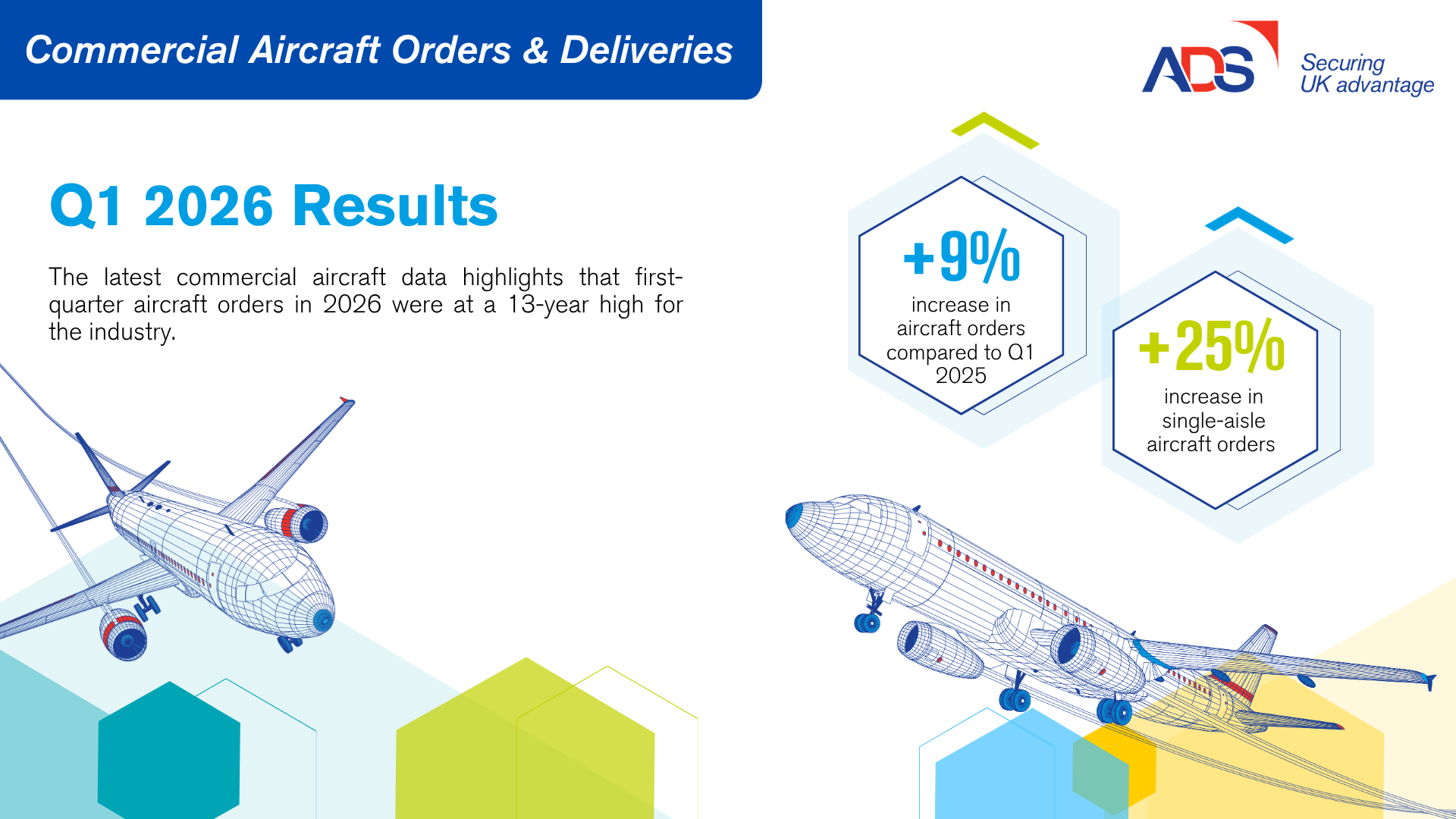
- 569 commercial aircraft orders were placed in Q1 of 2026, representing the largest Q1 order book since 2013
- Single-aisle aircraft orders were up 25% on the same period in 2025
- Record-high aircraft backlog of 16,656 aircraft orders is worth up to £385 billion to the UK economy
London (29 April 2026) – Commercial aircraft orders rose by 9% during the first quarter of 2026 compared to the same period last year, reaching 569 orders and marking the highest order number for any first quarter since 2013. According to trade association ADS, this was largely driven by a 25% increase in single-aisle aircraft orders across the quarter, indicating that demand for short-haul travel continues to grow.
The data, compiled by the trade association for the UK’s aerospace, defence, security and space industries, further finds that 261 aircraft were delivered in the first quarter of 2026, representing a 4% decline in aircraft deliveries compared to the first quarter of 2025. Despite the overall decline, deliveries of wide-body aircraft saw a 13% year-on-year increase and represent the highest first quarter delivery figure since 2020, pointing to improvements in the wide-body delivery pipeline.
The global aircraft order backlog now stands at 16,656 aircraft, the largest backlog figure since records began. At current production rates, ADS estimates that this could generate over £385 billion for the UK economy.
Aimie Stone, Chief Economist at ADS comments:
“The figures from the first quarter of 2026 show that confidence across the aerospace sector has remained resilient, despite an increasingly challenging geopolitical and macroeconomic backdrop. Aircraft orders have continued to rise, reflecting sustained demand in the market.
“However, given ongoing geopolitical uncertainty, it is still too early to say whether this momentum will be sustained through the year or whether growth may begin to slow. If the industry is to continue building on this progress, global policy coordination, alongside continued support from governments and the business community, will remain crucial.”