
Supported by ADS, the inaugural Defence Security Resilience Cymru (DSRC) event held at ICC Wales in Newport last week, convened SMEs, prime contractors, government and investors together to discuss the opportunities and barriers facing the Welsh defence sector. What emerged was a clear sense of ambition. Wales possesses significant industrial capability, growing expertise in advanced technologies and strong policy support. Yet it can be difficult for SMEs to secure the capital needed to turn opportunities into growth.
Chris Mears, from ADS member, Growth Lending, was there to hear the discussions. Growth Lending works closely with ambitious businesses in the defence sector, helping them access the funding needed to scale. To date, they have supported over 200+ SMEs with £1bn funding to support growth. They are part of our Business Services Network, bringing together trusted professional service providers with deep sector expertise to help ADS members access specialist support.
As a growth capital expert, we asked Chris for his takeaways from DSRC…
What struck me at DSRC was that real spirit of collaboration – a shared sense that Wales has an opportunity to build something really significant – but also a growing frustration at the speed with which investment is landing. Many SMEs are poised to grow but need capital to turn opportunities and contract wins into increased capacity and delivery.
Building on Wales’ defence DNA
Defence already makes an important contribution to the Welsh economy, supporting thousands of highly skilled jobs and more than £1 billion of Ministry of Defence (MOD) industry spending in Wales. Exactly the sort of highly skilled, well-paid and productive jobs that can drive sustainable economic growth.
The renewed focus on defence, national security and resilience also creates an opportunity to support a wider re-industrialisation of the UK economy – strengthening sovereign capability, rebuilding domestic supply chains and investing in the skills and technologies we will need for the future.
The £50 million Wales Defence Growth Deal provides a tangible platform from which to build. Its focus on autonomous technology and uncrewed systems plays to existing strengths, while measures to improve access to MOD facilities, develop skills and make it easier for SMEs to secure defence contracts should help remove barriers to growth.
The challenge now is to turn that ambition into contracts, investment, capacity and jobs.
Collaboration needs to become delivery
DSRC reflected that challenge well. Alongside the exhibition and speaker programme, Meet the Buyer and Meet the Investor sessions were designed to create practical connections between SMEs, customers and capital.
For SMEs those connections matter. The defence supply chain relies heavily on smaller businesses for innovation, specialist capabilities and emerging technologies. But winning a contract is only part of the challenge.
A major contract can itself create an immediate funding requirement as businesses need to purchase materials, place supplier deposits, recruit people or expand manufacturing capacity before receiving payment.
Winning a defence contract and financing its delivery are two different things.
Capital is available – but is it accessible?
One of the common themes was the need to unlock the investment required for tomorrow against a backdrop of the most unpredictable geopolitical landscape we have seen in over a generation.
The opportunity for defence SMEs has moved forward remarkably quickly. The financing ecosystem is doing its best to keep up.
We often hear that there is no shortage of capital available to good businesses. In broad terms, that may be true. But capital being available and businesses being able to access it are not the same thing.
Defence presents characteristics that traditional funding models do not accommodate easily: large and complex contracts, lumpy cash flows, customer concentration, substantial upfront expenditure and relatively modest historical profitability.
The answer is not simply for funders to accept more risk. It is about understanding the risk better and finding ways to make that risk manageable.
That requires greater sector expertise and a more forward-looking approach – understanding customers, contracts, sector dynamics, milestones and future cash flows rather than relying solely on historical EBITDA and tangible assets.
There is rightly a great deal of discussion about innovation within defence. We also need innovation in how we finance it.
All parties have a role to play
This isn’t solely a challenge for the finance community. If we want investment to flow more quickly, all parties need to improve.
Government has a critical role in providing clearer and longer-term buying signals. Greater visibility of future demand gives businesses the confidence to invest – and gives lenders and investors something tangible to get behind. The way contracts are structured, payment terms and procurement timescales can also materially influence whether private capital can support an opportunity.
Funders need to continue developing their understanding of the sector and create structures that reflect the way defence businesses and contracts actually operate.
And from a funder’s perspective, SMEs themselves need to focus on investment readiness. Strong financial management, reliable management information, credible forecasts and a clear understanding of the cash requirement associated with individual contracts, can make a significant difference to both the speed and likelihood of securing finance. Engaging with potential funders well before the capital is required is equally important.
Government, industry and capital therefore need to move forward together. Government can provide the demand signals and procurement environment; businesses need to demonstrate that they are ready to deliver and absorb investment; and funders need the sector expertise and flexibility to provide appropriate capital.
Turning opportunity into growth
The first DSRC gave plenty of reasons to be optimistic about the opportunity for Wales.
The industrial heritage is there. So are the skills, innovative SMEs, major defence businesses and increasingly the policy support. The £50 million Defence Growth Deal provides further impetus.
But re-industrialisation will not happen through government investment alone.
It requires a strategic partnership between government, business and investors – creating the demand, capability and capital that allow businesses to invest and grow.
The collaborative spirit evident throughout DSRC was an encouraging sign. The challenge now is to translate that collaboration into delivery.
Wales has defence in its DNA. The opportunity is to build on that pedigree and ensure today’s renewed focus on defence and national resilience translates into investment, industrial capability, growth and highly skilled, well-paid jobs.
Maximise Success with the ADS Business Services Network
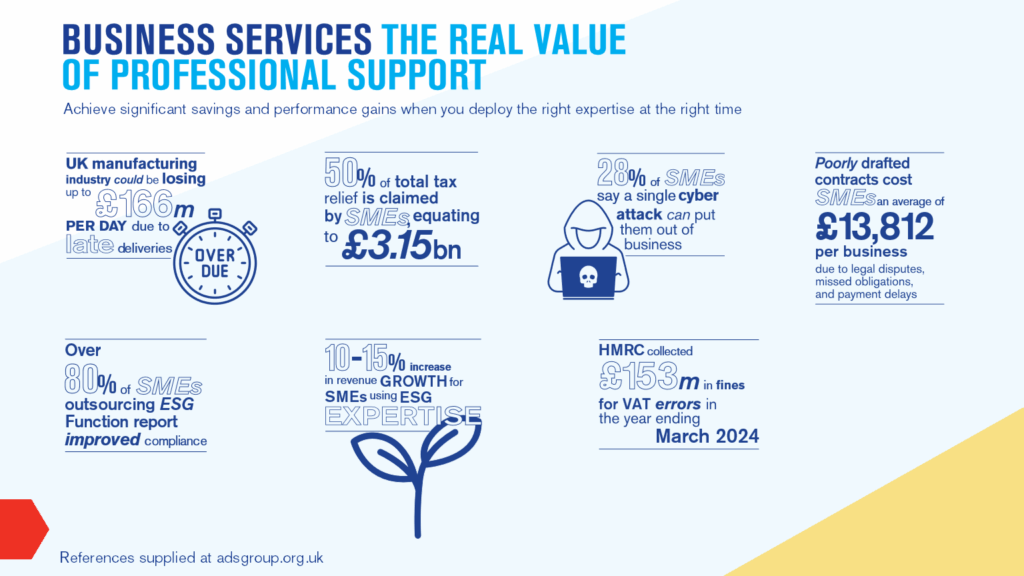
A growing band of ADS members, like Growth Lending, are business services firms providing professional advice and solutions in specialised areas such as financial, legal and digital services. They can help streamline operations, save costs and minimise risks.
Access that expert knowledge today.