
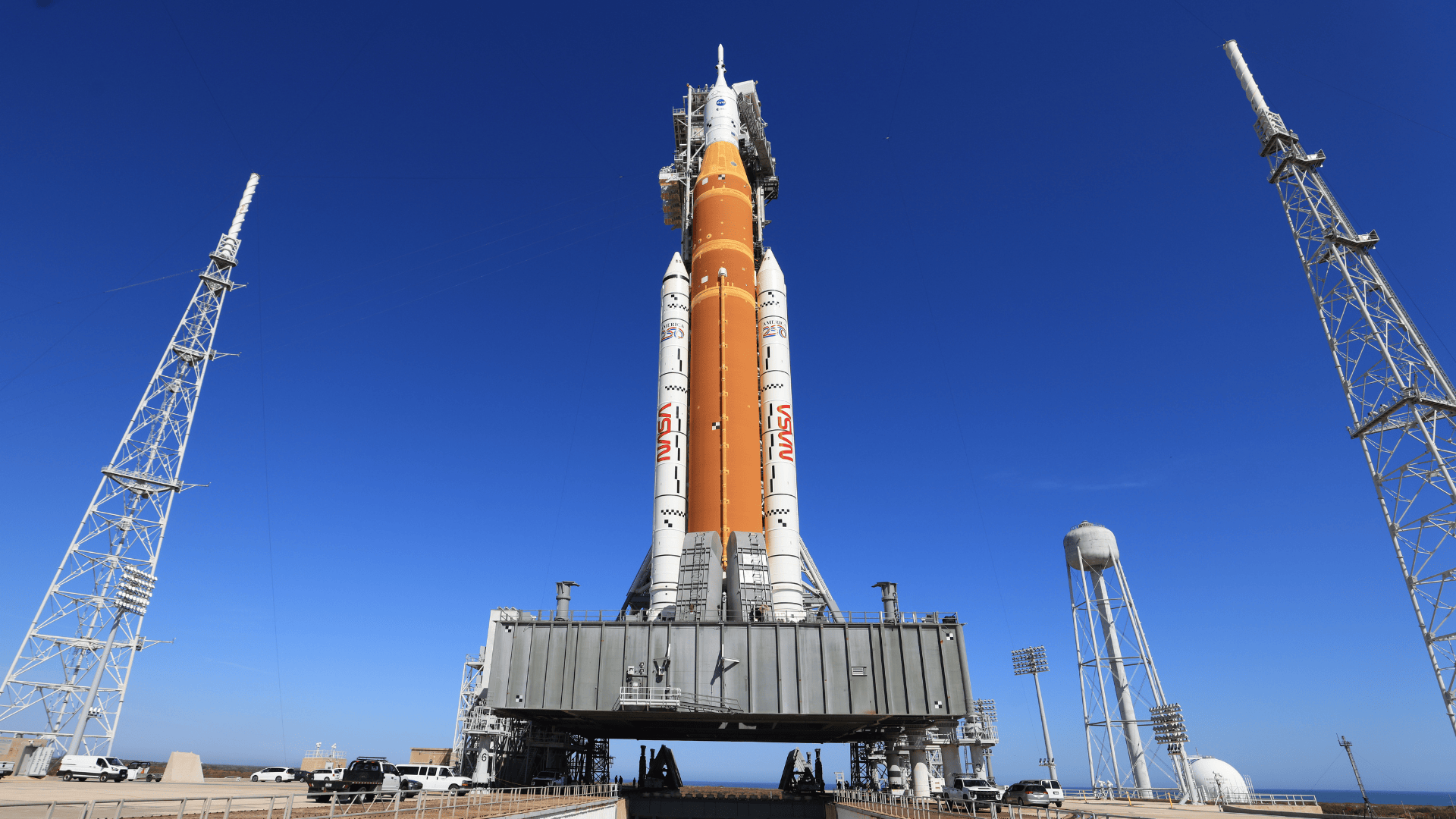
Image courtesy of NASA/Ben Smegelsky, Artemis II Mission
Introduction
The ADS Space Innovator series will run across 2026 exploring innovative technologies within the UK space sector. We’re excited to kick off the first blog of the series on the Artemis II mission.
In the wake of the safe return of four astronauts (and after dusting off my university notes), it’s time to discuss the Artemis II mission. Artemis, Greek goddess of the moon and twin sister of Apollo: nearly 56 years since man ventured to the moon, NASA have plotted the trajectory, for man, and woman, to return.
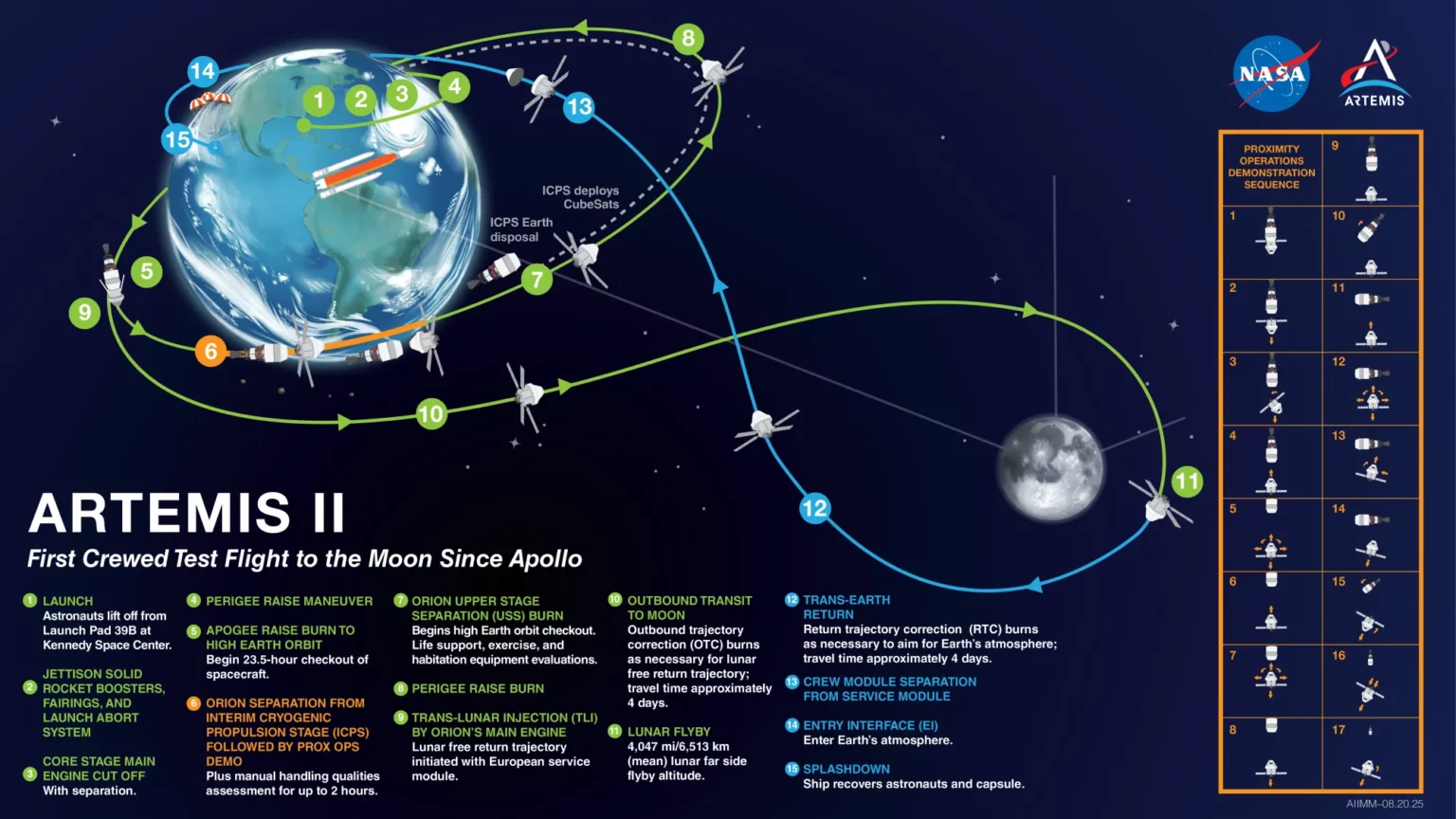
Image courtesy of NASA, Artemis II Mission
Look Back
Looking back, first, to Artemis I. Launched in 2022, the uncrewed spacecraft operated for 25 days, 10 hours and 53 minutes before splashdown off the coast of Baja California, USA. Intended for lunar exploration, travelling over 1.4 million miles and paving the way for an eventual human return, Artemis I was the flagship integrated flight test of both the Orion spacecraft, and the Space Launch System (SLS).
Artemis II is NASA’s first crewed mission, under the Artemis programme: travelling around 4,700 miles beyond the far side of the moon to evaluate Orion’s performance and document the lunar surface. The crew will also be subject to test and evaluation themselves, allowing NASA to monitor the effects of the deep space environment on human health, monitoring how stress, sleep, cognition, teamwork, immune system and psychological responses are affected through extreme radiation and microgravity.
Launch
- T + 00:00: Orion lifts-off at the Kennedy Space Centre
- T + 00:56: SLS reaches supersonic speed
- T + 01:10: SLS experiences max dynamic pressure (Max Q)
- T + 02:08: Solid Rocket Booster Separation – Sixteen separation motors fire, pushing the boosters away from Orion’s trajectory with 20,000 lbs of thrust in 0.68 seconds. The SRBs then splash down in the Atlantic.
Booster separation is a critical and high‑risk phase, with challenges including recontact, extreme yaw and roll, and load spikes on the core stage. To reduce these risks, high‑fidelity computational fluid dynamics and six‑degree‑of‑freedom simulations are used pre‑launch to model effects and fine‑tune timing to the millisecond.
- T+03:18: Launch Abort System (LAS) Jettison – With crew onboard, safety is paramount. The LAS is designed precisely for one of two scenarios:
- Scenario One – Emergency Abort: In a pad abort, the Abort Motor and Attitude Control Motor fire together, pulling Orion clear of the launch pad before the LAS is jettisoned and parachutes deploy for splashdown nearby. During an ascent abort, the Abort Motor pulls Orion away from the booster at peak loads, the ACM stabilises the capsule, and the LAS is jettisoned ahead of parachute deployment.
- Scenario Two – Nominal Ascent: After passing max‑Q and exiting the highest‑risk flight conditions, the system confirms attitude and aerodynamic loads are within limits and no abort conditions exist. The Abort Motor and Attitude Control Motor are inhibited, the Jettison Motor fires to detach the LAS tower and fairings, and Orion continues its ascent with reduced weight and drag, the crew safely committed to flight.
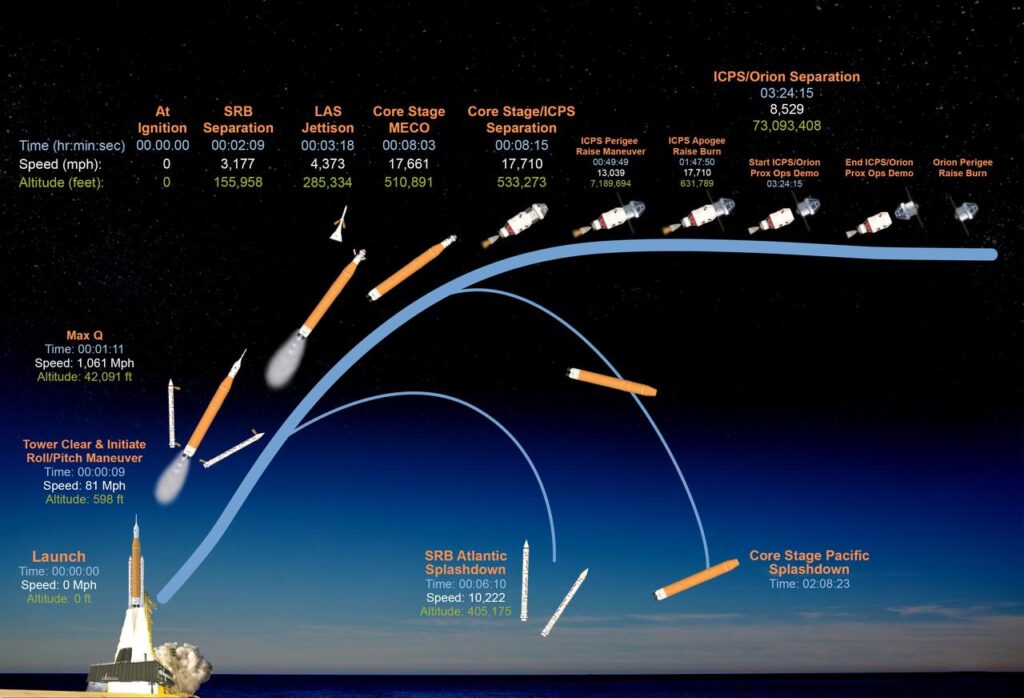
Image courtesy of NASA/Bruce Hudgins, Artemis II Mission
- T + 08:06: Core stage main engine cutoff (MECO) – the shutdown of the four RS-25 engines once Orion reaches its target velocity and enters ballistic flight.
- T+08:18: Core Stage Separation: Twelve seconds after engine shutdown, the core stage separates from the upper stack comprising the Interim Cryogenic Propulsion Stage (ICPS), Launch Vehicle Stage Adapter (LVSA), and Orion, then splashes down in the Pacific.
The ICPS performs a series of manoeuvres to raise Orion’s orbit before separating from the spacecraft. Proximity operations then validate Orion’s control systems, followed by the Trans‑Lunar Injection burn, accelerating Orion to escape velocity on its journey to the Moon.
Flying alongside Orion are CubeSats from space agencies in Argentina, Germany, Korea, and Saudi Arabia, collecting data on space weather and radiation effects across the Van Allen Belts.
Flyby
Time, and Orion, are flying by.
After coasting through deep space, 4 days, 23 hours, and 45 minutes since launch; the lunar flyby and observation began. The mission follows a free-return trajectory: using the moon’s gravitational pull to rotate Orion’s velocity vector and bend its path, redirecting the spacecraft towards Earth to begin the long journey home.
During this, the crew observed and photographed the lunar surface, documenting terrain features such as impact craters, ancient lava flows, and surface cracks and ridges, noting changes in colour, brightness, and texture to support evaluation of the history of the moon’s surface. The crew then experienced a period of solar eclipse, providing a perfect opportunity to observe the suns outermost atmosphere visible around the moon’s edge, and witnessed six light flashes created as meteoroids hit the lunar surface.
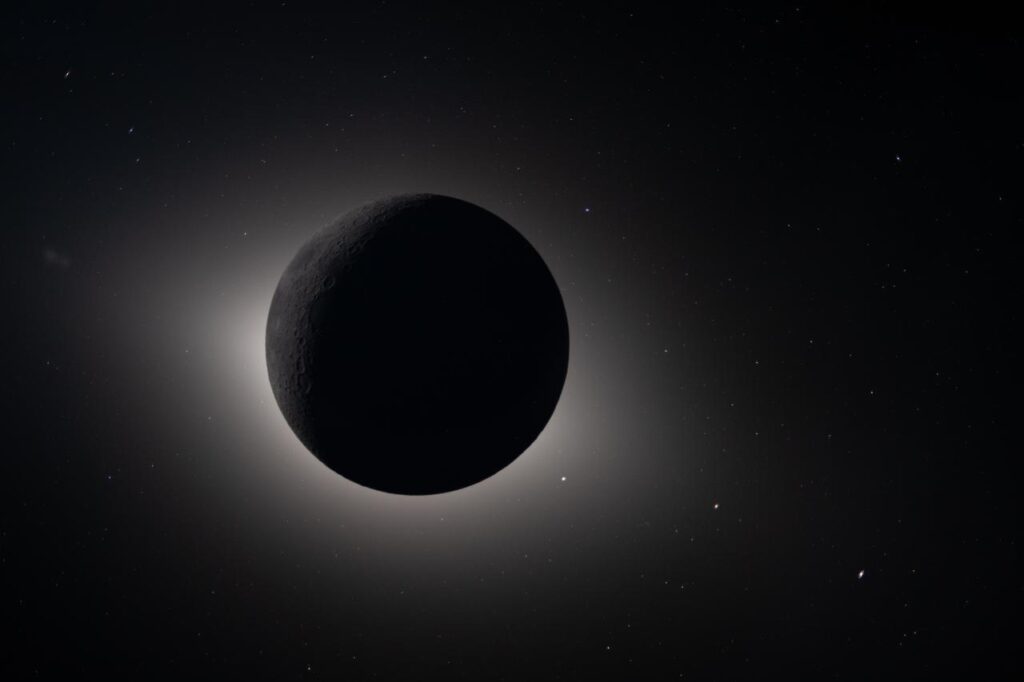
Image and video courtesy of NASA, Artemis II Mission
Splashdown
Keen observers of the splashdown noted what appeared to be a defect patch on Orion’s heat shield. This drew attention because Artemis I experienced greater‑than‑predicted heat shield charring, raising questions over whether the issue had been fully mitigated for Artemis II re‑entry.
NASA Administrator Jared Isaacman addressed the imagery and speculation, stating:
“As expected, engineers moved quickly to inspect the heat shield, beginning with diver imagery shortly after splashdown and continuing with onboard inspections. No unexpected conditions were observed. When the images are released, the difference between Artemis I and Artemis II heat shield performance should be clear.
The observed discolouration was not liberated material. The white area corresponds to the compression pad region and is consistent with local geometry, AVCOAT by‑products, and transitional heating effects. This behaviour was seen during arc‑jet testing and was expected in this area.”
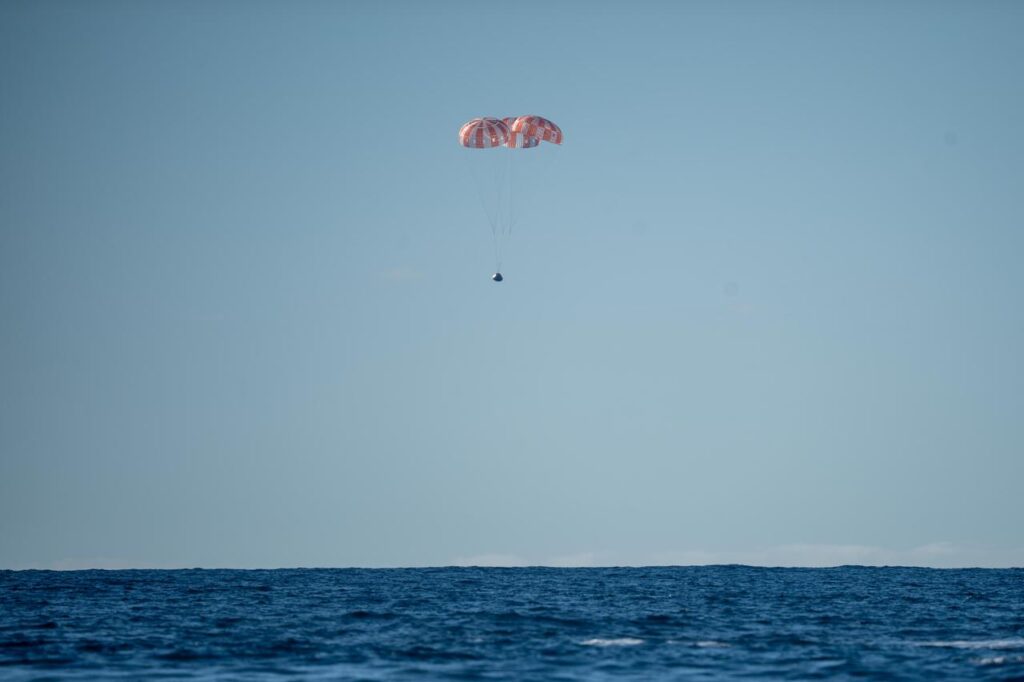
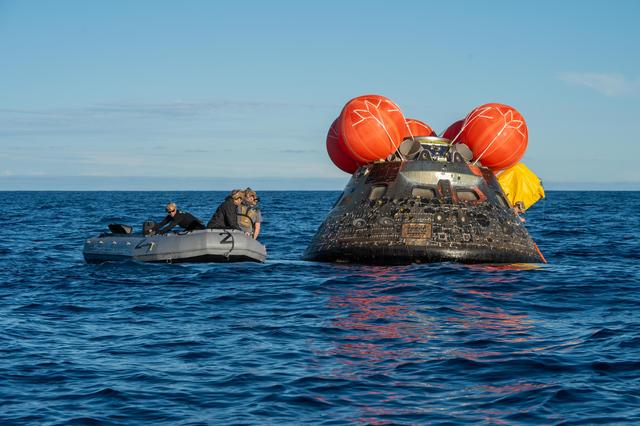
Images courtesy of NASA/Kevin Davis, Artemis II Mission
Artemis III
In the wake of two successful Artemis missions, humans will once again return to the moon, making history once again by landing at the lunar South Pole region. Beyond Artemis III, NASA will continue to work alongside international partners, establishing a pathway for eventual landings on Mars and beyond.