
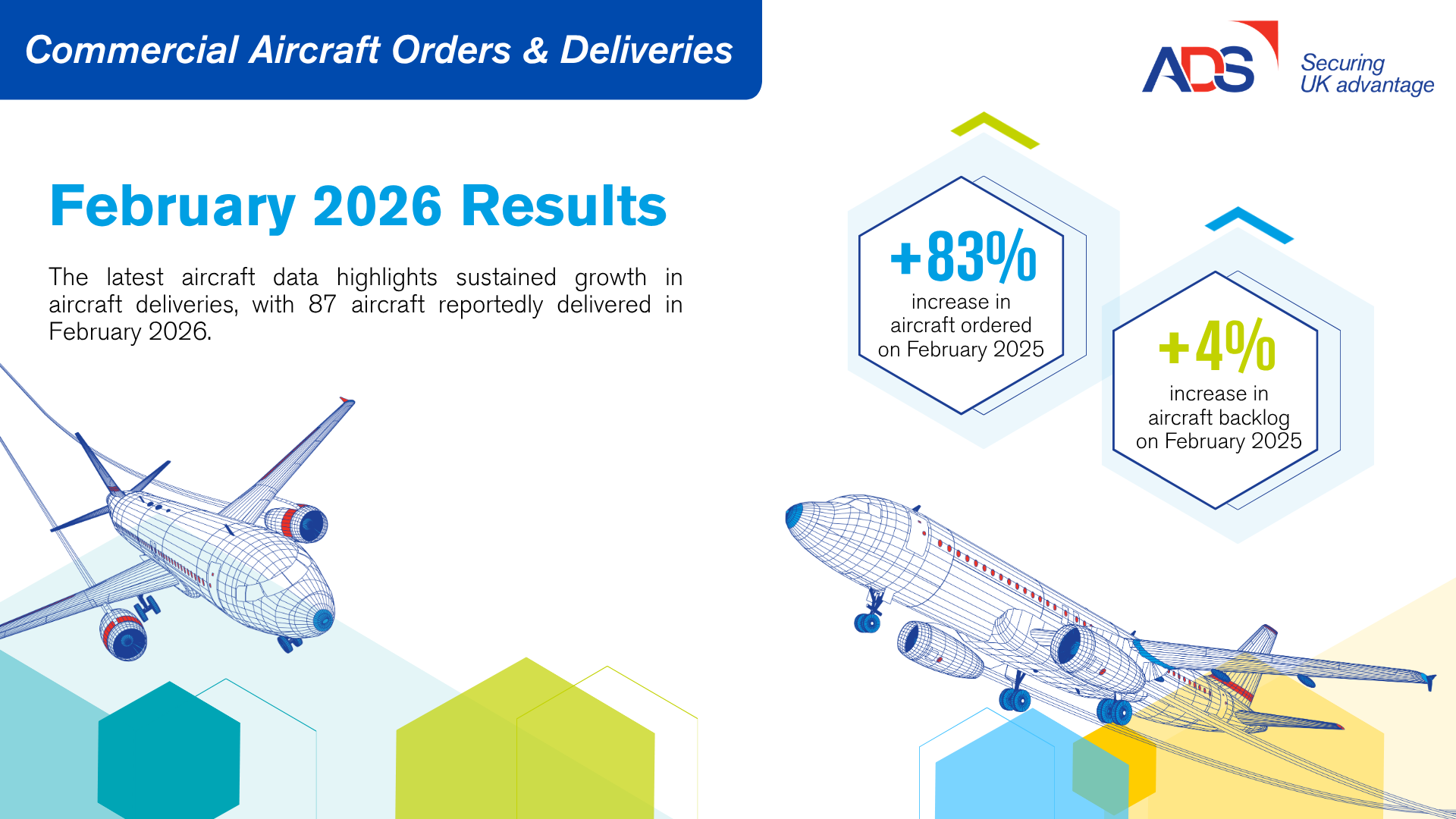
- February 2026 aircraft orders are up by over 80% compared to 2025 figures
- 87 commercial aircraft were delivered in February 2026, representing the highest for the month since 2019
- Over 16,400 aircraft orders are on backlog, which equates to over £260 billion in value for the UK economy
London (24 March 2026) – Commercial aircraft orders grew by 83% in February 2026 compared to February 2025 figures, marking the strongest February orderbook since 2023 according to trade association ADS. 14 widebody aircraft were ordered across the month, compared with zero a year earlier, signalling a renewed confidence in long-haul travel.
The latest aircraft data from the UK’s aerospace, defence, security and space trade association further highlights sustained growth in aircraft deliveries, with 87 aircraft reportedly delivered in February 2026. ADS data found that aircraft deliveries continued their upward trend for the fifth consecutive February, marking the highest number of deliveries for the month since 2019.
The aircraft backlog rose by 4% in February 2026 which now stands at 16,412 orders, setting a new record for the month. Despite accounting for over £260 billion in potential value to the UK economy at current production rates, the elevated backlog reflects continued challenges to the global supply chain.
Aimie Stone, Chief Economist at ADS commented on the figures:
“February’s increase in commercial aircraft orders reflects a strong growth trend and rising confidence in the aviation market. An 83% year-on-year increase, supported by the success of the Singapore Airshow, highlights how global events continue to influence demand. The significant share of widebody aircraft points to sustained interest in long-haul travel and network expansion.
“However, sustaining this record level of demand will depend on the sector’s ability to navigate existing and potential supply chain challenges. Recent weeks have highlighted the unpredictability of the global business environment, underlining the need for the industry to build greater resilience to the shocks and challenges that potentially lie ahead.”