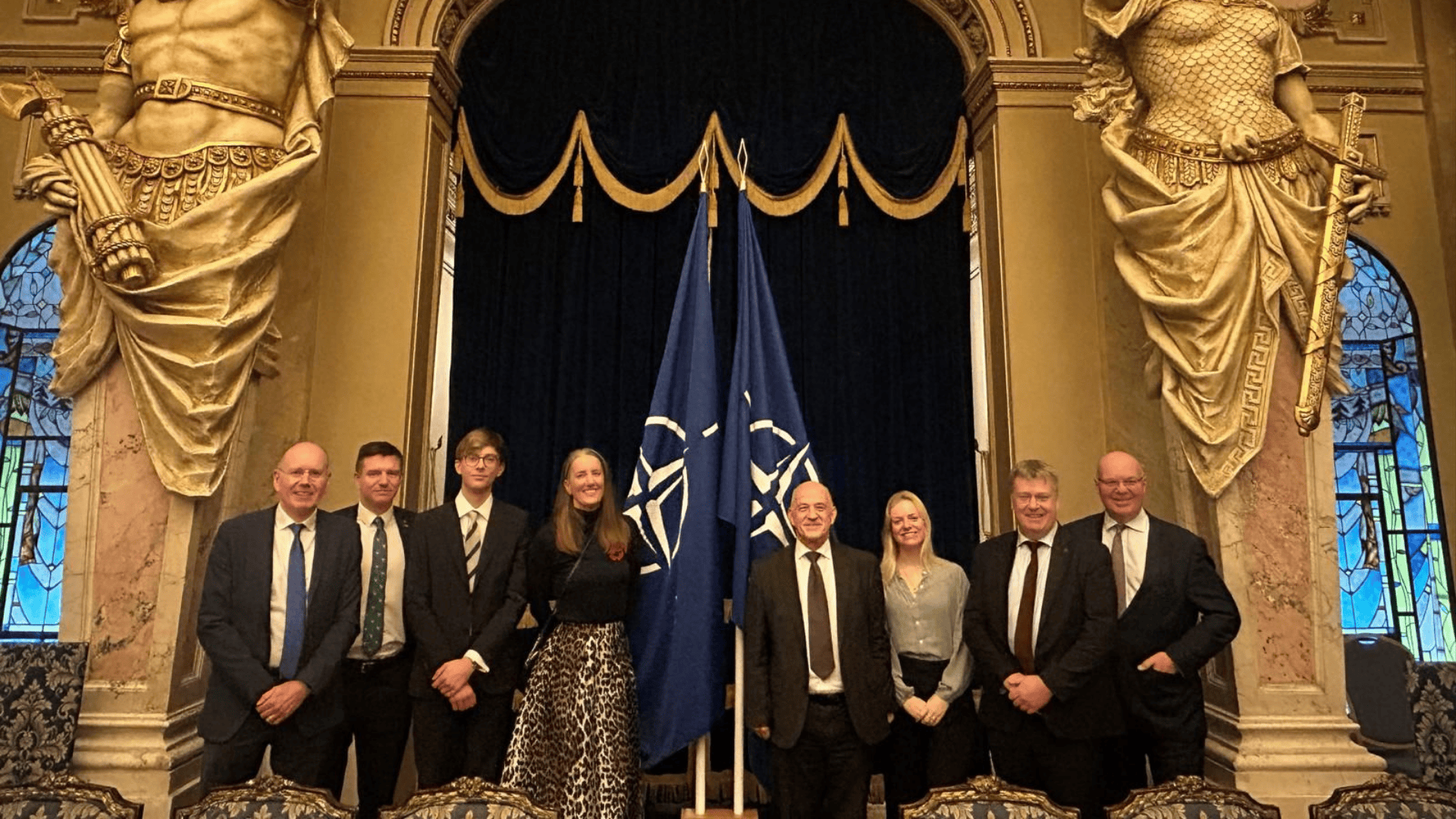
The recent NATO Industrial Advisory Group (NIAG) Plenary held in Bucharest underscored a pivotal moment for NATO and our industry relations. Behind a backdrop of The Palace of the Parliament, the two-day forum highlighted several pertinent themes: signalling a clear focus on pace, innovation and experimentation.
For the NIAG, this is a call to action: lean into future opportunities and maintain momentum, as demonstrated with the six-question tasker earlier this year. The Allied Command Transformation’s (ACT) pragmatic approach continues, with plans to progress this tasker and table new topics for discussion at the next ACT Community of Interest meeting in 2026.
Urgency vs. Process
A proposal for a spontaneous study by the Portuguese delegation highlighted a pressing challenge: NIAG’s sense of urgency. While the subject was deemed important, the projected timeline — delivering a report in 2028 — falls far short of the pace required. Despite this, several studies reported during the Plenary reaffirm their value as a key tool in NIAG’s arsenal.
Optimising CNAD and Strengthening Strategy
The need to optimise the Conference of National Armaments Directors (CNAD) was evident throughout discussions. ACT’s drive contrasted sharply with the lack of coordination from D2IA and the absence of a CNAD Plenary readout. Many concerns raised are reflected in the Framework for NATO Industrial Engagement FFT paper (January 2025) and could be addressed through full implementation of the NIAG Strategy. To accelerate this, Chair Ron Nulkes announced a small working group of Heads of Delegation — UK has already volunteered to participate.
Critical Links and Missed Conversations
Insights on the link between the NATO Defence Planning Process (NDPP) and the Future Force Study (FFS) reinforced the importance of NIAG’s role in requirement setting — a point echoed in the UK delegation’s letter to the UK NAD. However, limited time for discussion on the DPAP, and the absence of debate on NSPA and NCIA, remain concerns.
Representation and Relevance
The UK delegation raised a key issue: NIAG risks being perceived as representing only traditional industry, overlooking neo-primes and SMEs driving innovation. Building credibility in this space is essential, with UKINF playing a critical role. Similarly, the lack of review of the Rapid Adoption Action Plan (RAAP) was noted.
Bright Spots: SPACENET Momentum
SPACENET provided an optimistic update, showcasing tangible achievements and strong UK participation — both from industry and government. This stood in stark contrast to other presentations focused on process amendments. With ACT and D2IA present, NIAG must ensure discussions demonstrate relevance and impact.
The Bigger Picture
The Plenary closed with a sobering reflection: NATO and NIAG risk falling short of delivering a systemic approach to industry engagement at a critical juncture. Persistent resource constraints and procedural hurdles remain barriers. Key questions endure:
- How can NIAG strike the right balance between briefing and discussion?
- How does this work align with the Secretary General’s priority of supporting Ukraine?
- What clarity can D2IA provide on the NIAG–ACT–CNAD relationship?
The absence of answers perhaps explains NIAG’s low profile at the NATO Industry Forum—a gap that must be addressed if NIAG is to remain relevant and effective.