Last week, the UK was proud to host the first in-person AUKUS Advanced Capabilities Industry Forum (ACIF) for 2026 on the margins of Farnborough International Airshow, marking a significant milestone as AUKUS Pillar II moves towards delivery.
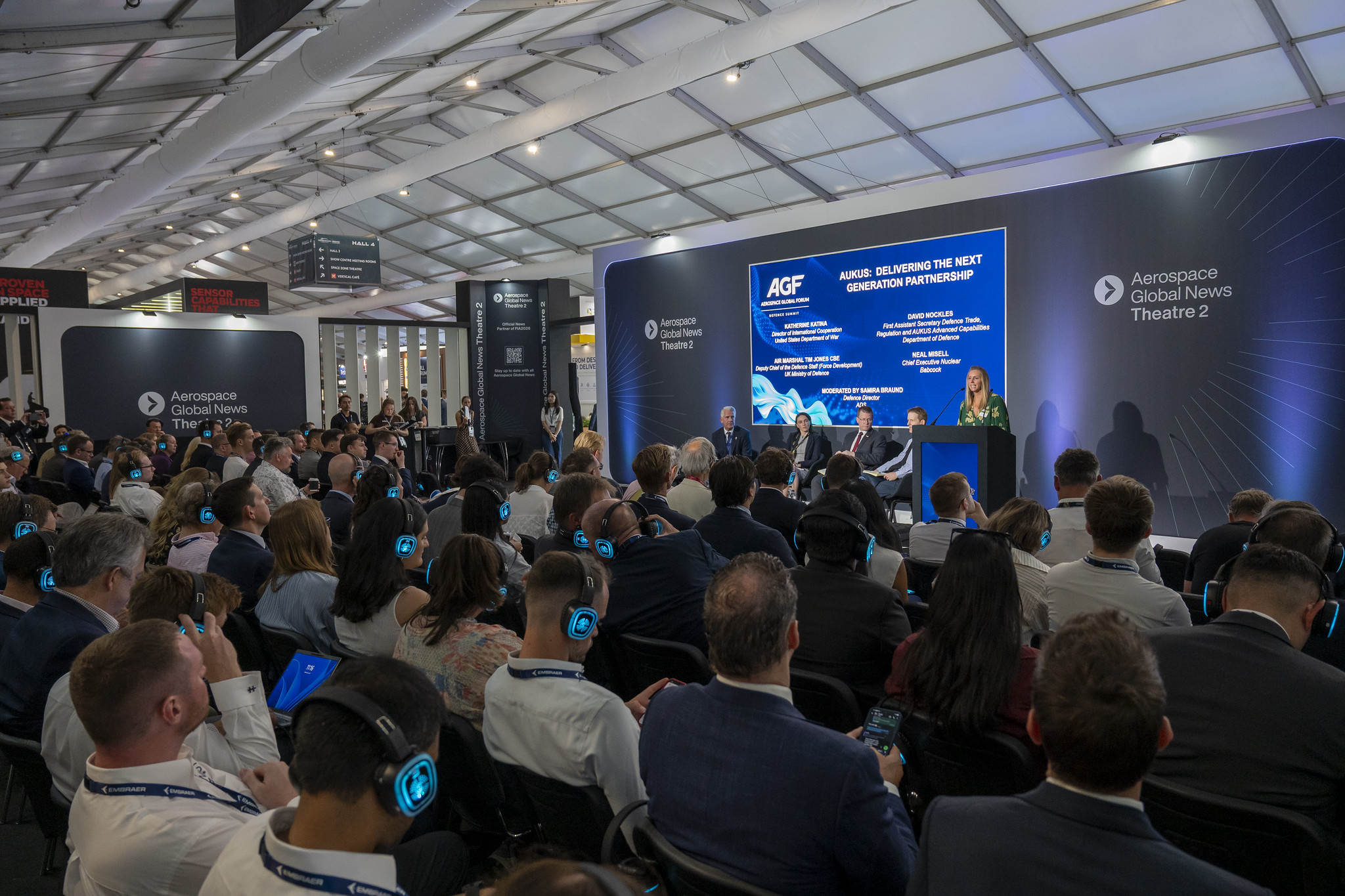
The ACIF built upon discussions held during the AUKUS panel earlier in the day at the Airshow, where visitors heard from Katherine Katina, Acting Principal Deputy Assistant Secretary for International Armaments Cooperation at the United States Department of War; Air Marshal Tim Jones CBE, Deputy Chief of the Defence Staff at the UK Ministry of Defence; Neal Misell, Chief Executive Nuclear at Babcock; David Nockels, First Assistant Secretary for Defence Trade, Regulation and AUKUS Advanced Capabilities at Australia’s Department of Defence; and Samira Braund, Defence Director at ADS.
Delivering the First Signature Project
The meeting took place just weeks after the announcement of the first AUKUS Pillar II Signature Project, which will deliver interoperable payloads and enabling systems for Uncrewed Undersea Vehicles (UUVs) across all three AUKUS nations. It is a tangible demonstration of how trusted partners can accelerate capability development through deeper industrial collaboration.
The Forum provided industry with an update from the Signature Project sponsor and helped shape the next phase of engagement ahead of a dedicated industry event this autumn. However, delivery is about far more than technology. Success will depend on creating the right conditions for governments, industry and academia to collaborate at pace.
Tackling barriers to collaboration
A key focus throughout the week was identifying and addressing the practical barriers that can slow collaboration, from cyber standards and security clearances to workforce mobility and export controls. Our trade barriers workshop, supported by ADS Deputy Director of Government Security and Vetting Paul Williams and Director of Overseas and Exports Brinley Salzmann, alongside industry representatives, demonstrated the value of bringing together the right expertise to solve shared challenges.
Building momentum across the partnership
Encouraging progress is already being made, including efforts to review the International Traffic in Arms Regulations (ITAR) excluded technologies list, helping to unlock greater collaboration across the partnership.
As momentum builds, we now look ahead to the United States, which will host the next ACIF in October. There, we will continue turning recommendations into action and see first-hand the progress being made through Maritime Big Play.
The pace of AUKUS collaboration is accelerating. Maintaining that momentum will require sustained partnership between government, industry and academia, but the foundations being built today will help shape the advanced capabilities of tomorrow.