
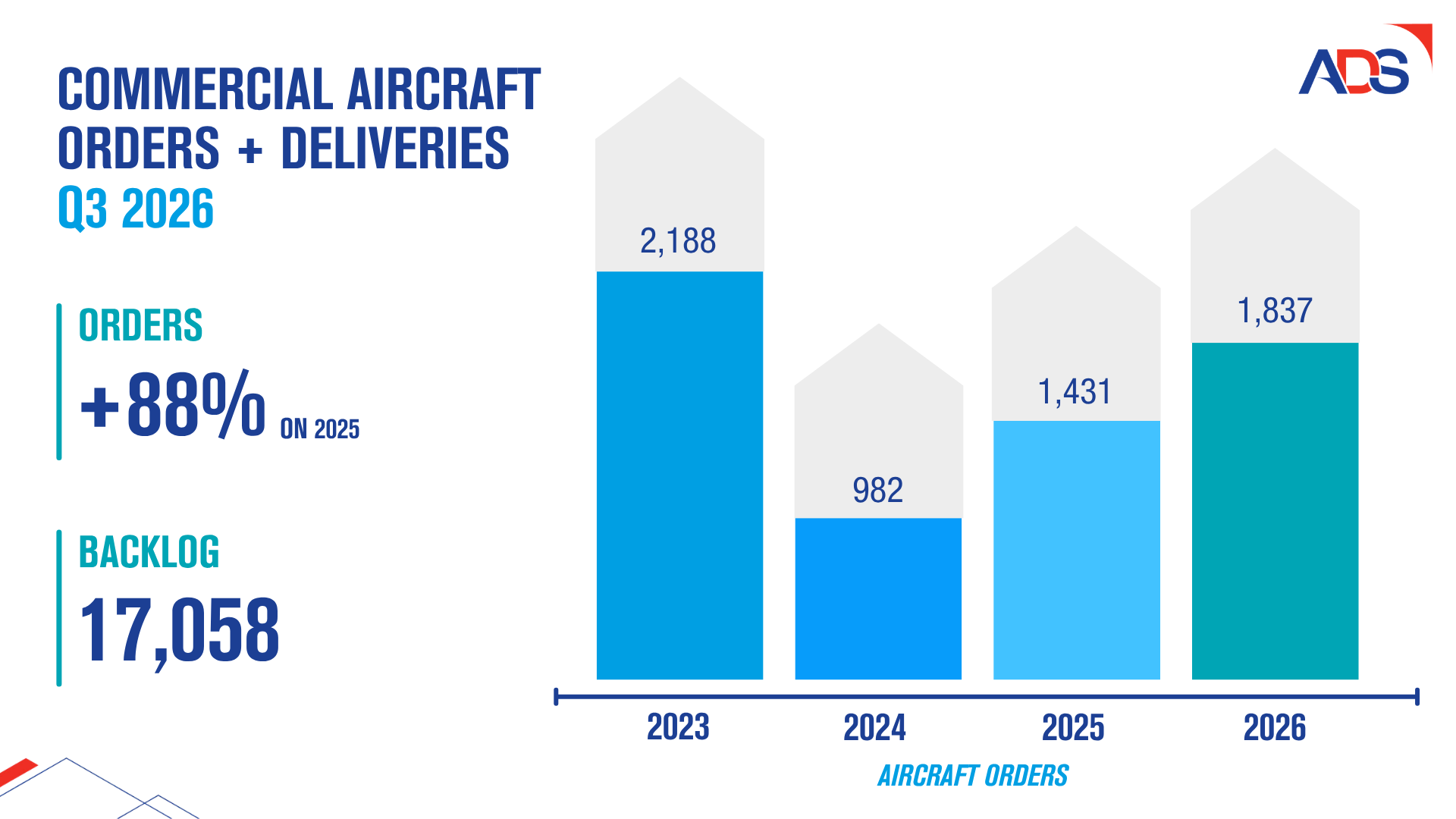
- 506 aircraft orders were placed in Q3 2026, an 88% increase on Q3 2025
- Aircraft deliveries reached their third-highest Q3 total on record
- The record aircraft backlog is worth up to £396.5 billion to the UK at current production rates
Global commercial aircraft orders increased 88% in the third quarter of 2026 compared with the same period last year, demonstrating growing confidence in the aerospace sector.
The 506 new commissions take the total orderbook so far this year to 1,837, which is 28% higher than at the same point in 2025. Demand for single-aisle aircraft was particularly strong, with 1,456 orders recorded during the first nine months of the year, an increase of 77% year on year, continuing the upward trajectory for short haul travel.
New figures from the ADS trade association show companies delivered 361 aircraft during Q3, the third-highest third-quarter total ever. This included a record 309 single-aisle aircraft as well as 52 widebody aircraft.
Across the first nine months of 2026, aircraft deliveries reached 1,034, the second-highest year-to-date total after 2018. Deliveries remain on track to meet ADS’ modest-growth scenario of 1,490 aircraft by the end of the year.
However, the global aircraft backlog now stands at a record 17,058 aircraft, marking a fourth consecutive Q3 record. At current production rates, the backlog represents more than 12 years of work and is worth up to £396.5 billion to the UK’s aerospace industry.
Realising that opportunity for the UK will depend on giving aerospace companies the conditions they need to ramp up production, including stronger supply chains, access to the right skills and finance, and competitive access to critical materials.
These conditions are also necessary for the UK to secure market share of next generation aircraft, with decisions about where these will be designed and built being taken now.
ADS’ Chief Economist, Aimie Stone comments:
“There are huge opportunities in front of UK aerospace. Orders for today’s aircraft continues to come in thick and fast, and decisions are being taken now about where the next generation will be designed, developed and built.
“But decisive action is needed to develop the skills, strengthen the supply chains, access the competitively priced steel and build the advanced manufacturing capabilities necessary to deliver today’s backlog and secure tomorrow’s aircraft programmes.
“If we compete with one arm behind our back, we risk this generational opportunity going elsewhere. If we act now, we can secure growth for decades to come.”
ENDS.