
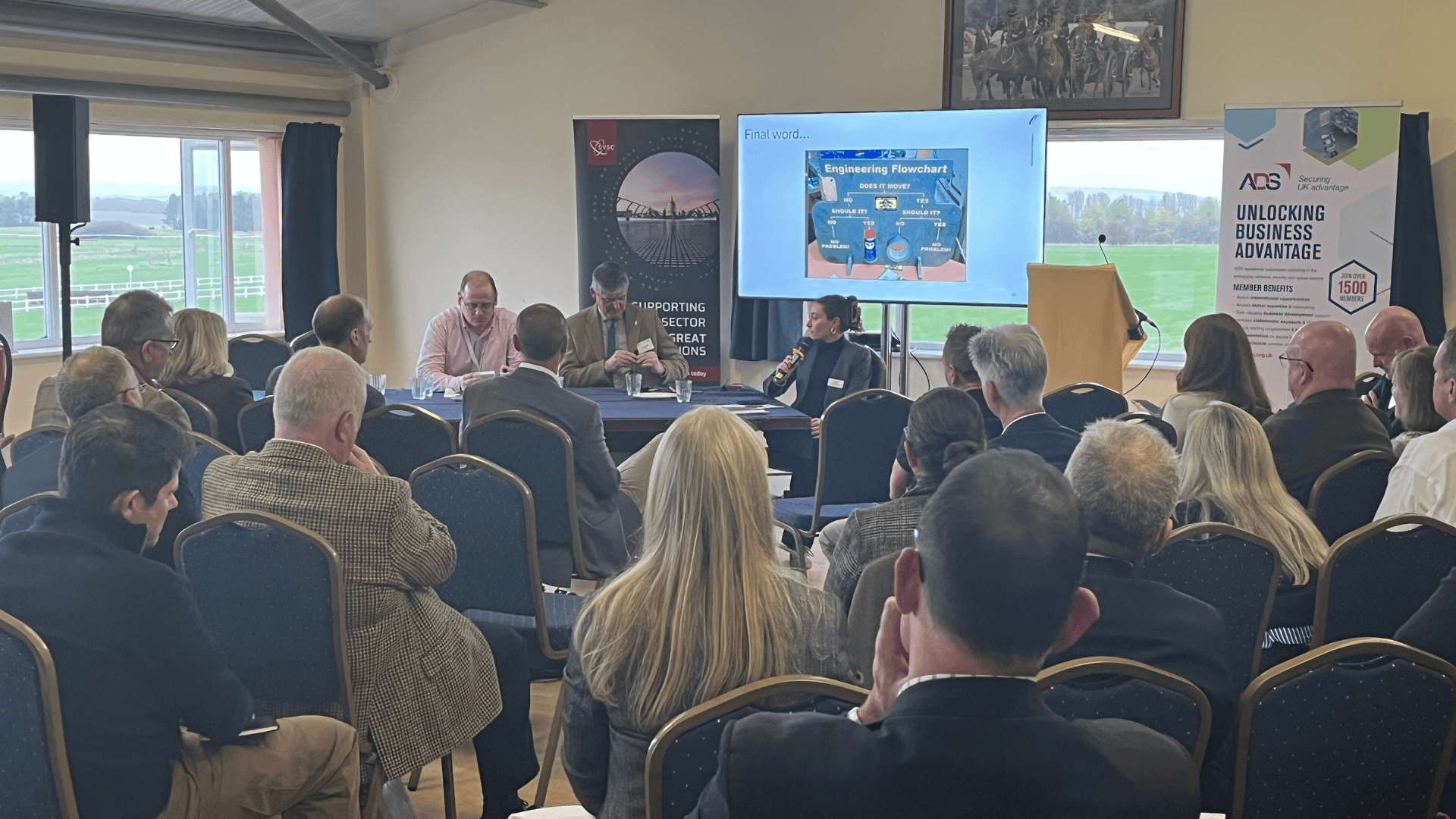
On 12 November, ADS hosted an SME Symposium, in partnership with SVGC, at the Larkhill Racecourse. The event brought together SMEs, Mid-Tiers and Primes for a day of open dialogue, examining the evolving defence landscape and identifying actionable steps to ensure SMEs can meet rising production demands and contribute meaningfully to national defence objectives.
Although the Strategic Defence Review and the Defence Industrial Strategy signal a shift towards more agile procurement, this ambition is not yet reflected in delivery mechanisms. MOD spend with SMEs remains low and has reduced from previous years, direct spend is around 4% in 2024–2025, with indirect spend at approximately 20%. Much of MOD procurement continues to rely on existing frameworks that restrict flexibility and limit SME access.
Procurement processes continue to present one of the most significant barriers for SMEs operating in the defence sector. Participants highlighted the heavy paperwork burden, complex legal terms and conditions, and increasingly demanding accreditation and vetting requirements. These challenges are compounded by risk-averse behaviours within the MOD commercial function, contributing towards a reluctance to deviate from recognised and familiar suppliers, a distinct lack of competition (continued increasing rate of single source contracting) and additional layers of bureaucracy.
The MOD’s new SME Commercial Pathway aims to tackle these issues by driving substantial changes in the behaviours and working practices of commercial officers. If effectively implemented, it should create greater flexibility within MOD commercial teams and enhance opportunities for SMEs to contribute to Rapid Commercial Exploitation capabilities.
Discussions also emphasised the need for stronger engagement with stakeholders who have not been routinely involved, including the Cabinet Office’s Small Business Advisory Panel and HM Treasury. Their involvement is essential to improve transparency around inspection metrics, funding allocations, and accountability mechanisms within MOD.
Another key theme was the importance of problem setting versus requirement setting. Improving readiness depends on agility and performance, not simply adherence to process. Participants noted the need to distinguish between disruptive technologies and truly disruptive thinking or processes.
The final major theme was the value of forming consortia to strengthen SME participation in tenders. Attendees proposed a dedicated workshop to explore consortium-building in more depth, alongside a structured lessons-learned session to help SMEs avoid common bidding pitfalls.
There is a clear and urgent need to turn rhetoric into practical action. The insights captured during the symposium must now drive tangible improvements in how SMEs engage with defence procurement and how the MOD enables their contribution to national security.
For further information, please contact anastasia.cucino@adsgroup.org.uk.