
Greenhouse Gas (GHG) emissions reporting is becoming increasingly important across the aerospace and defence sectors, including for SMEs. GHG reporting helps identify opportunities to improve efficiency, reduce costs and drive innovation. It is also a logical starting point for Environmental, Social and Governance (ESG) maturity, giving companies tangible data and a way to benchmark their environmental footprint.
By being proactive, SMEs can become more resilient, win more work, and demonstrate leadership in a global market that values transparency and sustainability. ADS ESG Executive, Jordan Croskery explains further,
Primes and government buyers increasingly expect clear, credible carbon data from their supply chains. By measuring and reporting emissions, SMEs can strengthen their competitive position, meet customer expectations and future-proof their operations against evolving regulations.
This might feel like a daunting new challenge, but it also presents a major opportunity. That’s why we have developed unique tools and support for aerospace and defence companies to help members audit, measure and report their emissions with confidence and take those next steps to embrace the full spectrum of ESG capability for long-term value.
Analysis & Impact – raising ESG performance through the ADS Supply Chain Solutions Framework
The level and quality of GHG emissions reporting is dependent on the data available.
At an early stage of maturity, data collection is often limited, fragmented and not guided by a clear plan or strategy for improvement.
For businesses at a more advanced stage of ESG maturity, comprehensive greenhouse gas emissions reporting has become business as usual. These organisations have the capability to collect and evaluate data across their entire supply chain, ensuring a complete view of their environmental impact. This work is also integrated into a broader, interconnected approach; where sustainability is closely linked with people, governance and ethical business practices.
To help SMEs build a plan for ESG transformation, we have created a structured pathway through our Supply Chain Solutions (SCS) Framework. It supports business as they evolve from low to higher maturity.
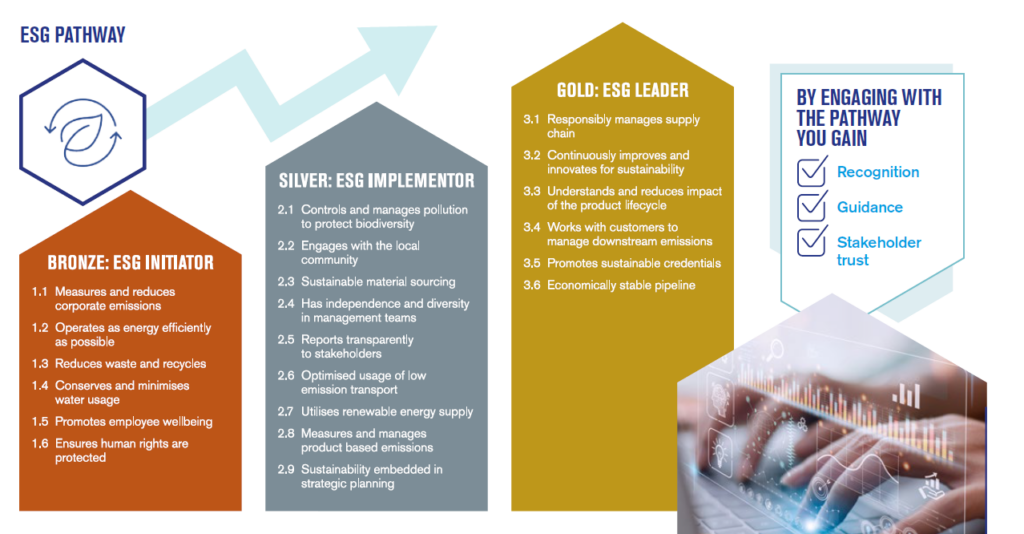
We have also created a FREE ESG self-assessment tool, bespoke for our sectors. This tool can pinpoint where companies are on their ESG journey, providing information to improve. Where you are on the maturity level is recognised by the awarding of Bronze, Silver or Gold status.
Case Study: ADS achieves ESG Initiator Bronze status
As with our SME members, we are not regulated to report our emissions, but we recognise it is the right thing to do. By focusing on improving our ESG performance, we hope to contribute to industry-wide change by promoting ESG amongst our members and the sectors we represent. We wanted to achieve Bronze status in recognition of this effort.
We started out by using the free ESG self-assessment tool through SCS to create a benchmark on our current performance.
Jordan continues,
Integrating the ESG Assessment tool into our ESG strategy gave us clear, actionable insights that helped us to identify gaps in our sustainability practices and align our strategy with the sectors we work with. We wanted to achieve Bronze status, and followed the recommendations from the assessment to help us get there.
The assessment tool provides clear, actionable insight, bespoke to an individual company. From the information we received, were able to expand our focus into action, providing much needed momentum.
Here are some of the steps we undertook to reach the goal of achieving Bronze accreditation:
- Creating an ESG taskforce:
After an initial assessment to identify gaps, an internal ESG taskforce was set up to start to tackle areas for improvement identified in the report. This taskforce consists of colleagues from different departments across the business to ensure actions can be implemented across the business more effectively.
- Collecting baseline data
We started collecting baseline data for GHG emissions reporting, with spend based calculations for 2023 and 2024. This data came primarily from company electricity, water and gas bills, procurement records and travel receipts. This is an important preliminary step to form an emissions reduction plan.
- Establishment of an ESG policy
The ESG policy sets out our strategy to reduce our environmental impact, and outlines the responsibilities ADS is committed to, such as aligning with the government’s commitment to net zero by 2050, operating both in a socially and ethically responsible manner and following sustainability best practices to reduce our emissions at the source.
- Promoting ESG awareness with ADS staff
A key action item was to promote ESG awareness with our colleagues within ADS. Through the use of regular training and updates, we can keep everyone informed and support the development of an ESG conscious culture.
Why aim for Bronze accreditation?
By improving our own ESG performance and undergoing the process of analysis and change, we aim to lead by example, driving industry-wide transformation and promoting ESG among our SME members and the sectors we represent.
Engaging with the ESG pillar has given us a solid foundation in our sustainability journey and the guidance we needed to understand our key focus areas. As an SME who doesn’t have an ESG department per se, it was important for us to implement a strategy that could be integrated across all departments.
Want to assess and improve your ESG performance?
For further information and support about ESG, please contact jordan.croskery@adsgroup.org.uk.
Or, why not consider these four ways to get started:
1. Go to the SCS Framework website
We have a new website to provice support for SMEs including information and resources on the ESG Pathway and more.
Visit the scsframework.org.uk.
2. Chart your ESG transformation journey with our self-assessment tool
Answer a series of self-assessment questions to determine Bronze, Silver or Gold status. An instant report provides detailed analysis. This helpful tool can also help customers when benchmarking the capability of their supply chain.
Access the self-assessment tool here.
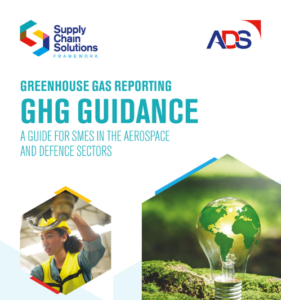
3. Read our guide to GHG reporting for aerospace and defence SMEs
Measuring and reporting greenhouse gas (GHG) emissions is foundational for a sustainable future.
This comprehensive guide provides practical insights, step by step instructions and a worked example for both mandatory and voluntary GHG reporting. Access the guide here.
4. Sign up to our ESG webinar in November
Hear from Jordan Croskery as she outlines our free tools, services and programmes to support your ESG goals including the ADS ESG Charter, GHG Guidance and Reporting, ESG Assessment Tools, CBAM, and more.
Email the team to reserve your place: scs@adsgroup.org.uk.